
Why Ashlan-Fu is Kyrgyzstan’s Favorite Cold Noodle Soup
In fact, if you ask locals in Kyrgyzstan to suggest a dish that embodies the wider food culture of this Central Asian nation, they’d likely take you directly to Ashlan-Fu. Kyrgyz cuisine is notoriously heavy on meats and local specialties like the comfort food Beshbarmak, but Ashlan-Fu offers a welcome light contrast with its chili-spiced offerings that both locals and travellers have fallen in love with.
But how did this cold, spicy noodle soup become an iconic culinary staple of Central Asia? That is why Ashlan-Fu occupies such an important place in Kyrgyzstan.
The Blend of History: The Dungan lineage
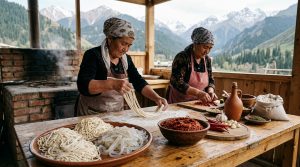
The cold noodles soup descends from Dungan (Chinese Muslims) and Uyghur people who came to the Tian Shan region in the late 19th century. They carried with them the storied food systems that made life in Chinese networks possible, weaving starch-noodle techniques from China into Central Asian Flavors. In the end, the dish became fully integrated into Kyrgyz food culture — a prime example of how multicultural history informs contemporary national identity.
Unmatched Flavors and Textures
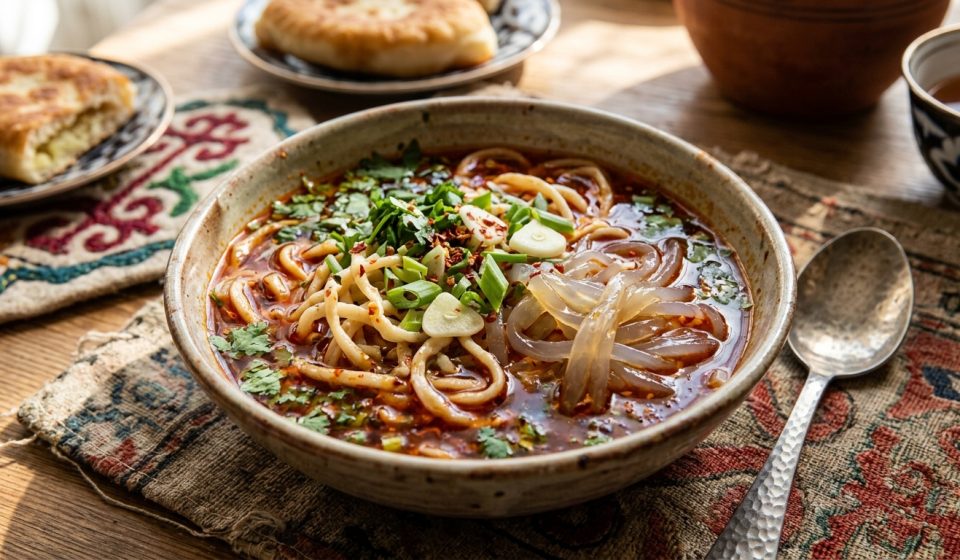
Whereas Central Asian stews are typically warm, it is served cold or at room temperature. It has a nonlinear dual-element mix for example:
Chewy wheat noodles (laghman).
Potato or mung bean starches to prepared smooth jelly-like strips.
Garlic spicy vinegar broth mixed with chili oil (laza) and herbs.
The vinegar gives it a punch, and the cool starch absorbs some heat to create a combination that is hard to resist.
The Pride of Karakol
While it is found throughout the country, Karakol in eastern Kyrgyzstan is widely viewed as the capital of Ashlan-Fu. Crowds arrive at the infamous “Ashlan-Fu alley” in Karakol’s Bugu Bazaar to try out real life examples prepared by street sellers. Eating the soup with a hot deep-fried potato pie (piroshki) is an everyday practice for locals.
Affordable, Everyday Comfort Food
Fast, it is so cheap and available. Beloved as a summer thirst quencher and touted as the cure for a sore head, it transcends social barriers; sipped by university students, marked stallholder and global foodie alike.
Frequently Asked Questions (FAQ)
Your knowledge about food from Kyrgyzstan, is Ashlan-Fu the National Food of Kyrgyzstan?
Kyrgyzstan formally recognizes Beshbarmak as its traditional national dish. While residents treat Ashlan-Fu as an unofficial national and cultural icon, especially in eastern regions like Issyk-Kul and Karakol.
Is Ashlan-Fu vegetarian?
Yes! In contrast to a lot of meat-focused Central Asian foods. The standard version of Ashlan-Fu features wheat noodles, starch strips, an egg together with garlic, vinegar and chili sauce. You can always verify with the vendor, but it’s one of the most plant-friendly meals that you’ll encounter in Kyrgyzstan.
How is Ashlan-Fu traditionally eaten?
You consume this dish cold with chopsticks or a spoon. It is almost a local custom to order and dip warm piroshki (fried potato pastry) into the spicy, sour broth.