







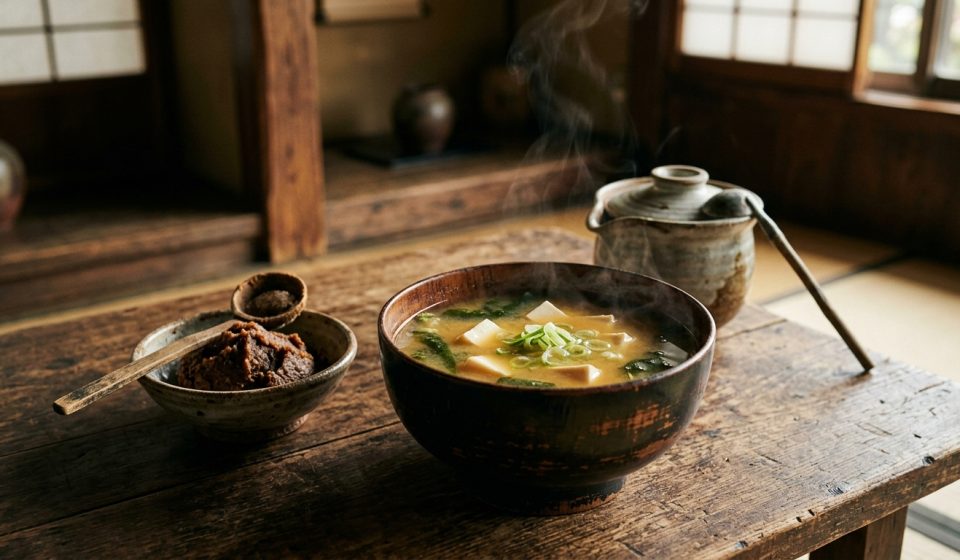

Japanese Miso Soup: From Ancient Rituals to Global Comfort Food
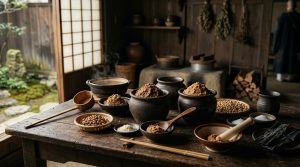
Miso soup (Misoshiru) has been one of the representational Japanese dish. A staple food brimmed with umami, warming and beneficial for health based. But prior to miso soup becoming a global comfort food on the daily. It had traversed ancient monasteries, samurai battlefields, and imperial courts for nearly a millennium.
To learn why miso soup tastes the way it does requires that we journey into how fermented soybean paste is laying claim to an entire nation of food.
Miso Paste in Ancient Japan: The Asuka and Heian Periods
Miso alone stretches back over 1300 years. In Japan, early forms of fermented soybean pastes such as hishio or misho were introduced from China (by Buddhist monks) as early as the 7th century.
People did not eat miso soup during the Heian period (794–1185). Nevertheless, nobles, samurai, and high government officials considered it a luxury food exclusive to them. People ate it straight, smeared it onto steamed vegetables, or even used it to pay salaries.
MISO THROUGH THE AGES
Heian – (794-1185) for RESTAURANT LUXURY food, RAW as CUTOM
Kamakura – (1185–1333) Evidence to support miso soup recognized by mortar & dashi base method
Sengoku (1467–1603) Basic mix for warring samurai
Edo (1603–1867) Common Street food which accumulated great mass production
Japanese Miso Soup Takes Shape During the Kamakura Period
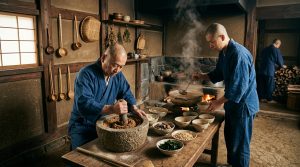
The recognizable version of the iconic soup that we know today started to take shape throughout the Kamakura period (1185–1333). That is about the same age as Zen Buddhist monks who brought stone mortars (suribachi) from China. Also could grind rough whole grain fermented soybean paste into a watery milk that incorporated.
They also combined this ground paste with dashi (a kelp- or fish-rich umami stock) to create the first true miso soup. This formed the core of Ichi-ju-Ichi-sai (“One soup, one side”). A healthy eating structure made up of rice, soup and one macaroni dish which is still a basic of Japanese cooking at home.
Samurai Superfood: The Sengoku Period
Then during the war-happy Sengoku period (1467–1603), miso soup made the jump from monastic dwelling to military strategy. In fact, miso was selected for warmongers as a paramount source of protein, salt & probiotics for marching armies on the maneuver!
A feudal lord including the Takeda Shingen and Date Masamune promoted local product of miso to feed their army. Samurai used to bring these “balls” of miso paste dehydrated or grilled and bundled with straw or dried taro stalk so that they could dissolve in boiling water on the battlefield at the snap of a finger.
More to read: Familiar Comfort Food (Edo Period to Now)
The land flourishing from the peaceful Edo period (1603–1867) led to an explosion in soybean cultivation, giving commoners free ability to make their own miso paste. In large cities like Edo (now known as modern-day Tokyo), branches began to open, and many specialty miso shops appeared, as well as roadside places selling it.
Miso soup became traditional in the 20th century and a mainstay of Japanese life. Now, it is savored globally for its fiber-filled nutrients. Also—if we dare to love you with it—the side dish comfort of probiotic goodness crammed.
Frequently Asked Questions (FAQ)
Q: What Is Miso Soup Are the Main Ingredients?
Consists of two main ingredients for the traditional miso soup. Dashi (a soup stock made from kombu seaweed and dried bonito flakes) and a miso paste (fermented soys, salt and koji fungi starter). Tofu, wakame seaweed and scallions are some common types of add-ins.
Is this Miso Soup good for your gut?
Yes. Miso paste is a fermented food, with the healthy probiotics that help digestion, promote diversity of gut microbiome and enhance immunity.
Q: What is the difference between white (Shiro) and red (Aka) miso?
Shiro (White Miso): White miso has been fermented for a short period of time, contains high proportion of rice or barley. It is softer, sweeter and much paler in tone.
Red Miso (Aka): Longer fermentation time and more soya beans. This one is way darker, saltier and it has a way higher umami profile.
Should you boil miso soup?
No! Heating miso soup above half boiling point will destroy the beneficial live probiotic cultures and denatured all the natural aromatics of the paste. Always remove your dashi stock from active heat when whisking in your miso paste.

Comments are closed.
[…] people who think back on Egyptian food will recall standard road food like Koshary or Ful Medames as the first thing to cross their mind. But in the culinary history of Egypt lies […]
[…] fact, if you ask locals in Kyrgyzstan to suggest a dish that embodies the wider food culture of this Central Asian nation, they’d likely take you directly to Ashlan-Fu. Kyrgyz […]
[…] (or Shurpa)—one of the most complete and tastiest dishes revealing the spirit of Central Asian cuisine, Como. It’s a nourishing broth of meat and vegetables. Boiled hand in hand, creating the […]