
Turkish Eggplant Dishes: Why Patlican Is the King of Turkish Cuisine

Having eaten at a Turkish table you are familiar with the patlican; the unassuming eggplant. It may be called “Sultan of the Vegetables” throughout Turkey, but eggplant is hardly a passing trend. It is one of the foundations of Turkish culinary identity.
Turkish cuisine has more than a hundred eggplant specialties, from smoky mezes to elaborate casseroles. So, why has this shiny deep purple vegetable captured the hearts and stomachs of a whole country?
Ottoman Cuisine and the Royal History of Turkish Eggplant Dishes
It was in the Ottoman Empire that Turkey’s love affair with eggplant really blossomed. Chefs of the royal palace developed intricate processes to turn common elements into grand banquets fit only for the Sultan. Signature classics such as Hünkar Beğendi (literally “Sultan’s Delight”—a gentle lamb on a bed of charred eggplant puree mixed with milk and cheese) were born in palace kitchens. The vegetable, thanks to its royal endorsement, had now become a prestigious element at the imperial level.
Unmatched Culinary Versatility
Just touch cauliflower for the coming years and eggplant to fight its way in! In Turkey, chefs employ every cooking technique imaginable:
Charcoal Roasting (Közleme)—imparts smokiness into foods like patlican salatasi.
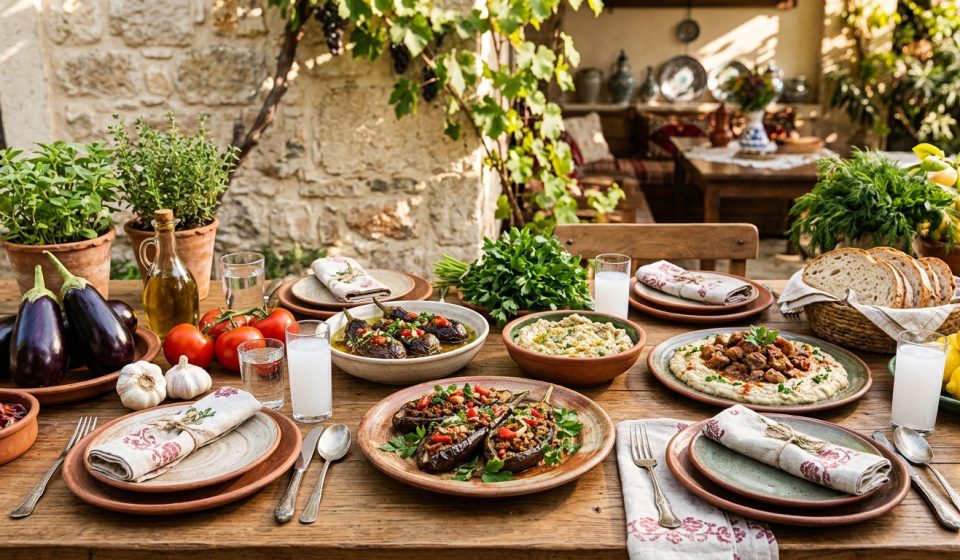
Dolmalar (Stuffing): Replicated in such famous dishes as Karnıyarık (eggplant stuffed with spiced ground meat) and İmam Bayıldı (stuffed with onion, garlic, and tomato cooked in olive oil).
Fry & Bake: The base of oil rich summer casseroles and syde dishes.
Its porous spongy flesh is a natural sponge for garlic, olive oil, tomatoes and spices. Making it the perfect host of these big Turkish flavors.
Ideal Agriculture and Mediterranean Climate
Turkey has very sunny climates, rich soil and long summer seasons for optimal cultivation conditions of many of the best varieties of eggplant. Due to the vegetable being cultivated nationwide, it is fresh, affordable and available to everyone from the home cook to high-end restaurants alike.
Centerpiece of the Mediterranean Diet
Aside from flavour, there is a sense in which eggplant occupies a sort of home turf within Turkey’s healthy, veg-forward food culture. It is low-calorie, high-fiber, antioxidant rich and gluten free. In cooler months, eggplant dishes baked in olive oil (zeytinyağlılar) are a fresh, wholesome plant-based meal during hot summer months.
Conclusion
The Turkish fascination with the eggplant is best explained through a unification of imperial reach, agricultural bounty, culinary pliability and unforgettable taste. Whether grilled on the barbie or baked with olive oil, patlican is still number-one in the Turkish kitchen.
Frequently Asked Questions (FAQ)
Prettiest Turkish eggplant dish: dirhem stuffed up.
One of the most popular meat dishes with eggplant is (and in fact its symbol) Karnıyarık (eggplants stuffed quarter-half wise with ground beef or lamb, tomatoes and onions). İmam Bayıldı (tomatoes, garlic, and onions stuffed into eggplant, cooked in olive oil) is also famous — especially among vegetarians.
And: Why Do Turks Burn Their Eggplants in an Open Flame?
Flame-roasting (közleme) blistered skin lends an unmistakable smoky scent and silky quality. As it is with Baba Ganoush, this is a basic technique that enables you to create traditional Turkish eggplant salads and dips.
What does it mean — İmam Bayıldı and where did the name come from?
Legend says that a Muslim cleric (Imam) lost his senses from excitement when he tasted the lovely taste of this dish. Another version claims he fainted after hearing how much expensive olive oil the cook used to make it!