







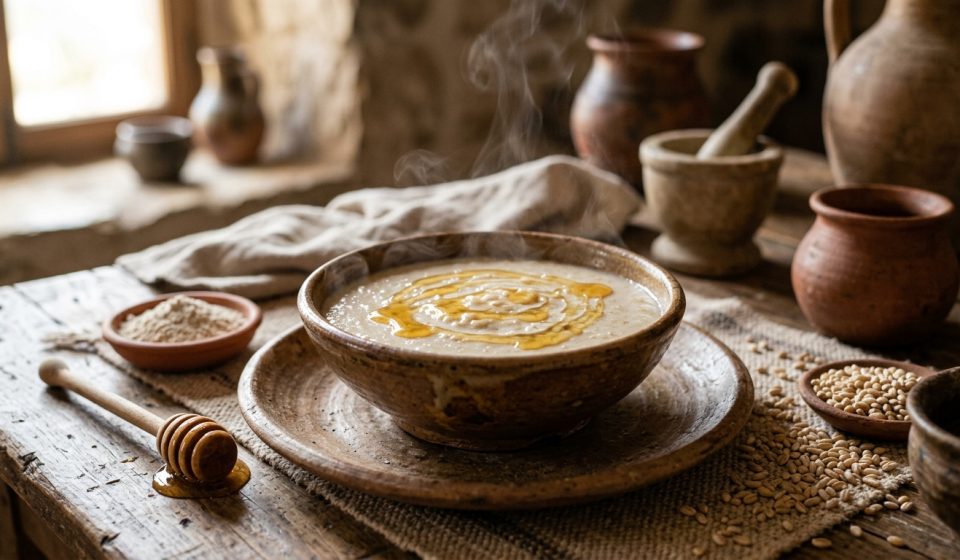

Talbina: Traditional Islamic Barley Porridge, History, Benefits & Recipe
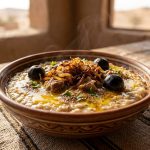
Among the hundreds of traditional Middle Eastern dishes and foods, one particular dish has deeper cultural ties than most: Talbina. A warming desk dish made with a barley flour, milk and honey. The most uncomplicated of meals has represented comfort, healing and spiritual help for more than 1,400 years.
It has a depth; much more than the surface simplicity of Talbina. A culinary piece to an ancient Arab culture, Islamic tradition and nature-centric way of medicine. It all aid in giving the context for factor that creates enhanced value.
What is Talbina? Origins and Etymology
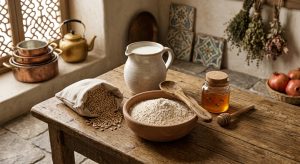
The term Talbina comes from the Arabic word for “milk” (laban). People call it this because when you cook barley flour in milk, it turns the mix white and gives it a smooth texture
Humans domesticated barley as one of their earliest crops and have used it for thousands of years across regions like the Fertile Crescent and Pre-Islamic Arabia. Only the aristocrats ate wheat; the common people relied on barley as their staple food because it grew fast, survived harsh desert conditions, and packed high nutrition.
Recipe : [ Barley Grains ]│ ▼[ Coarsely-Ground Flour ] │(Boiled with Milky)│▼[ Warm Talbina drizzled with Honey]
Drugs related to Islamic History/Talbina Prophecy
One of the best examples of this is Talbina which we are going to discuss in the 7th century with Tibb al-Nabawi (Prophetic Medicine). Because this verse only makes sense when it comes to the sick and depressed. As part of the traditional recommendation specifically attributed in numerous true Hadith collections including sahih al-Bukhari and Salah al-Musslim.
Whenever people brought a sick person to Aisha’s (R.A.) house, or when a family member died, she began by making talbina.
Talbina relieves the heart of a sick man and lightsens his grief, (al-Mustadrak, 4/67)
(Sunan Abu Dawood & Akhila e-Shari)
A Food is a Medicine in the Islamic World of the Medieval Age. Moreover, as many of the illustrious scholars have indicated—amongst them and in this case, Ibn al-Qayyim—the solution was not so much that Talbina (the food) was lighter than heavy or heavy foods and easier for the body to digest. But rather its remarkable rejuvenating properties on means of bodily energy coupled with alleviating emotional distress left some baffled.
Blending Ancient Wisdom with Modern Nutrition
Modern science has confirmed what the old philosophers all suspected a 1000 years ago:
- Whole barley is a good source of an important precursor, tryptophan the amino acid that regulates serotonin (the body’s main neurotransmitter for mood regulation).
- Excellent For The Heart And Digestive System Beta-glucan. A soluble dietary fiber found in barley, decreases levels of the LDL (bad) cholesterol as it helps to normalizes blood sugar levels.
- Has many minerals like magnesium, iron, zinc and B vitamins → This is a great food for recovering from exhaustion.
Frequently Asked Questions (FAQ)
Talbina itself has an easy name of few details.
One of the simplest recipes for it is Talbina (from which it is derived), made with three ingredients: finely ground barley flour (whole wheat flour); either milk or water; and raw honey. Doses · optional: crushes = nuts Nut version in an optional flavor texture!
Talbina Vs. oatmeal: what is the difference today?
While both dish options rely on whole grains, Talbina uses ground barley flour, whereas people make oatmeal from oats. Today, scientists link barley directly to high levels of beta-glucan fiber, just as practitioners traditionally utilized it in Arabic medicine.
Consequently, families served Talbina on days of bereavement because they knew that grieving people often lost their appetite and suffered from digestive issues.
They were also ineffective to some extent. Talbina was a hot liquid and going down your throat was practically effortless for the body; and quieted the mind.

Comments are closed.
[…] the center of Arabian hospitality sits a golden, spiced concoction that does much more than wake you up in the morning. This is Saudi Coffee Traditional […]
[…] (also spelled Thareed and Tashreeb) Very few dishes awaken the cultural, historical or spiritual fitrah in us as Tharid does. This is because it has been one […]