
Egyptian Molokhia: From Ancient Nile Valley Tradition to National Favorite
But few dishes sing the song of Egyptian cuisine like Molokhia (or Mulukhiyah or Molokhiya). The leaves of the jute mallow plant (Corchorus olitorius) have provided this silky, garlic-laced green soup to families in Nile valley for millennia. But how this unpretentious leaf has become the national dish of all Egypt?
Join us as we explore the stunning history, agricultural legacy and cultural significance of Molokhia.
Egyptian Molokhia History: From Pharaohs’ Cure to Royal Delicacy
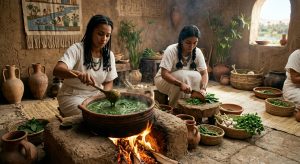
Molokhia can trace its origin back from Ancient Egypt. Folklore around the world tells two primary stories about how Egyptians encountered the plant for the first time:
1. The Pharaonic Healer Legend Behind Egyptian Molokhia
Legends state that an ancient Egyptian pharaoh suffered a fatal intestinal disease. Doctors prescribed a warm broth that consisted of cooked jute mallow leaves. Well, the king drank it and suddenly was fine. The dish eventually was nicknamed Mulukhiya, after the Arabic term Mulukia (literally “belonging to kings”). It remained for centuries a dish only enjoyed by Pharaohs and noble families.
2. The Hyksos Legend and the Origins of Molokhia
Some legends state that when people brought the South African wild plant to the Hyksosians—a tribal community of native Egyptians who invaded Egypt around 1650 BCE—the plant poisoned them. Rather than being poisons, they found the leaves to be delicious and an excellent source of nutrition, making it a significant part of their diet.
Why Was Molokhia Banned in Medieval Egypt?
Molokhia faced an extraordinary turn of events in history under the 10th-century Fatimid Caliphate. In 1005 CE Caliph Al-Hakim bi-Amr Allah famously prohibited eating Molokhia.
Some suggest that this Caliph simply disliked the slippery texture, while others claim he felt obliged to ban it because of poor press relations connected with various rival political figures. Authorities publicly punished anyone caught eating or selling Molokhia. Fortunately, after his rule, officials lifted the ban and Egyptians brought the soup back to their tables as a beloved comfort food.
How Traditional Egyptian Molokhia Is Prepared Today
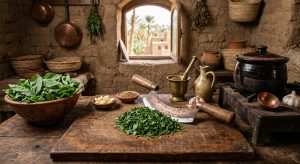
Modern Egyptian Molokhia is based on chopping up well-fresh or dehydrated leaves with a two-tipped crescent blade named a makhruta.
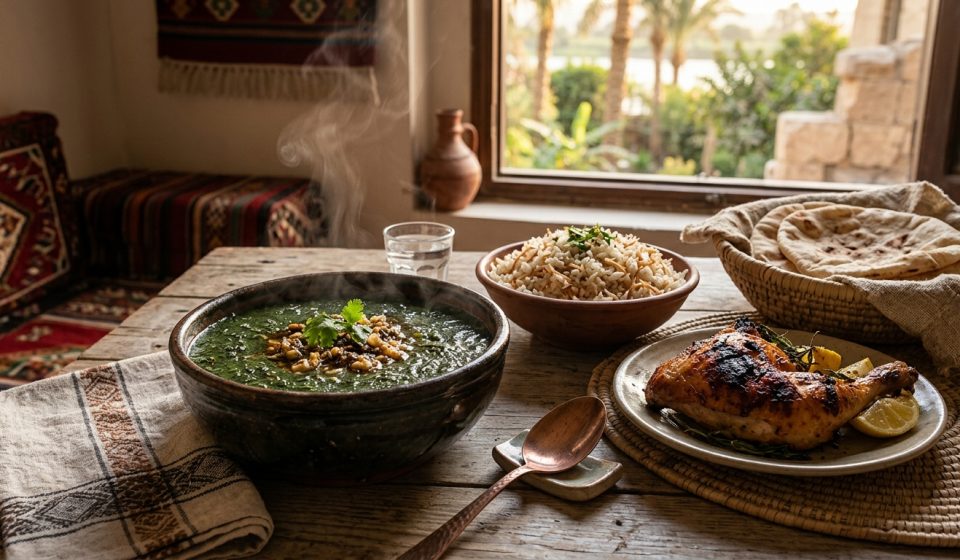
Cooks simmer the finely sliced leaves in a rich broth (specifically rabbit, fowl, or fish broth. It all concludes with a sprinkle of Takleya —a sizzled concoction of garlic and ground coriander stirred into the pot in the moment before serving. Traditionally, Egyptians eat it over white rice, scoop it up with warm pita bread, or serve it alongside roasted chicken.
Frequently Asked Questions (FAQ)
What does Molokhia taste like?
The add-on has an earthy, very mild nutty flavor like spinach or kale but has added nuances from the sizzling takleya seasoning (with garlic and coriander).
Is Molokhia healthy?
Yes! Jute mallow leaves pack Molokhia with vitamins A, C, and E, potassium, iron, calcium, and dietary fiber, turning the soup into a highly nutritious superfood.
What’s the secret “gasp” in preparing Egyptian Molokhia?
In Egyptian custom, it is imperative that the cook takes a brief audible breath (the Shahga) while covering the soup pot with garlic takleya to ensure great flavor!