
The Rich History of Shurva: Uzbekistan’s Iconic Comfort Soup
Shurva (or Shurpa)—one of the most complete and tastiest dishes revealing the spirit of Central Asian cuisine, Como. It’s a nourishing broth of meat and vegetables. Boiled hand in hand, creating the tenderest pillar of Uzbek culture. A steaming bowl of history slipping through the long foray of time with centuries worth of Silk Road trade routes, nomadic folklore, and culinary transmutation.
The Silk Road Origins of Uzbek Shurva
Shurva stems, e.g. from arabic шурba (literally “broth”) or the Persian shurba (“salty water”). The nuances surrounding this palatable soup established themselves from the Mediterranean to South Asia, with spices, cooking methods and ingredients shepherded through merchant caravans traversing empires on the Silk Road.
A simple necessity in Uzbekistan—turned into an artistic exploration. These are just fat from lamb and mutton because the nomadic Turkic tribes were dependent on livestock (mostly sheep). It had anti-spectacular broth, meant to aid worn out pilgrims wandering by way of the frigid winters of the desert and up arduous slopes carved out via mountains: roast meat sparked on a spit or boiled away in a heavy forged iron cauldron (kazan).
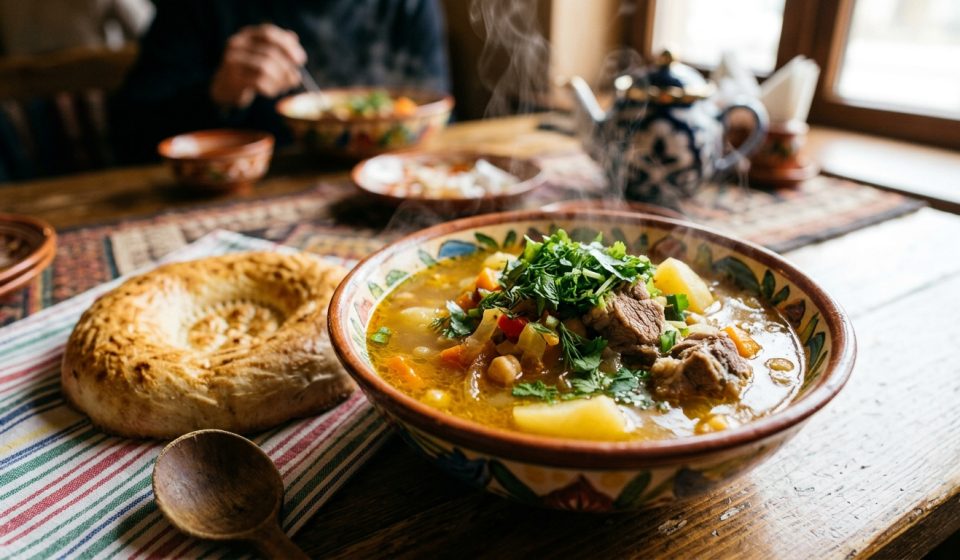
Traditional ingredients of Shurva in Uzbekistan
In fact, the primitive soup was much humbler: just water, fatty mutton, wild onions and local herbs. Over time, with resettlement in the fertile embrace of Uzbekistan, these settlements extended agriculture using root vegetables like carrot and turnip and radish
The soup was received and reshaped by New World crops. Potatoes and tomatoes arrived, as they are now in all Uzbek kitchens to provide bulk of the starchy/acidic broth color Cilantro, dill and purple basil (raihan) served as unfamiliar garnishes brightening up Hollandaise–rich animal fats.
Key Variations in Uzbek Cuisine
Uzbek traditional cuisines distinguish two basic ways of cooking using:
Kainatma Shurva (Clear and Mild Soup): Cooks put raw ingredients in the same vessel and cook them slowly on low flame for hours. It has a light but flavorful broth.
Kovurma Shurva: On the other hand, cooks fry meat and onions in the kazan without water and then add vegetables like carrots, potatoes, and dried spices, which brings out a darker, bolder, and stronger flavor.
They gave various corners of Uzbekistan to their taste. From the chickpeas (Nokhat Shurva) into meatballs (kufta Shurva), up to herbs based on mountains, depending on the area.
Cultural Significance Today
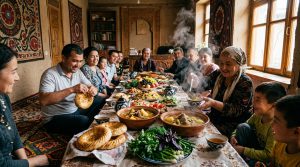
Not just a meal, Shurva reminds us above all to hospitality. The Uzbek style brings it to a big hot bowl of soup and a couple of fresh non (flatbread) — compulsory layout indicatives. A Must Have at Weddings or Family Gatherings and Even Community Festivals – The Ultimate Comfort Food of Central Asia.
Frequently Asked Questions (FAQ)
What is Uzbek Shurva made of?
Uzbek Shurvay is another decadent broth of mutton or lamb, potatoes, carrots, onions and the sweet bell peppers. Flavored with cumin and coriander then garnished with the freshness of cilantro and dill.
What is the difference between shurva and shurpa?
They refer to the same dish. “Shurva” reflects the Uzbek pronunciation, while “Shurpa” (or Shorba) is common across Russian, Persian, and broader Central Asian transliterations.
Is Shurva healthy?
Yes, Shurva is a single-preserved meal prepared with bone-in meats which are high in protein and zinc along with too many vitamins and fiber from whole vegetables.