








Kunafa: The Incredible History of the Traditional Middle Eastern Dessert

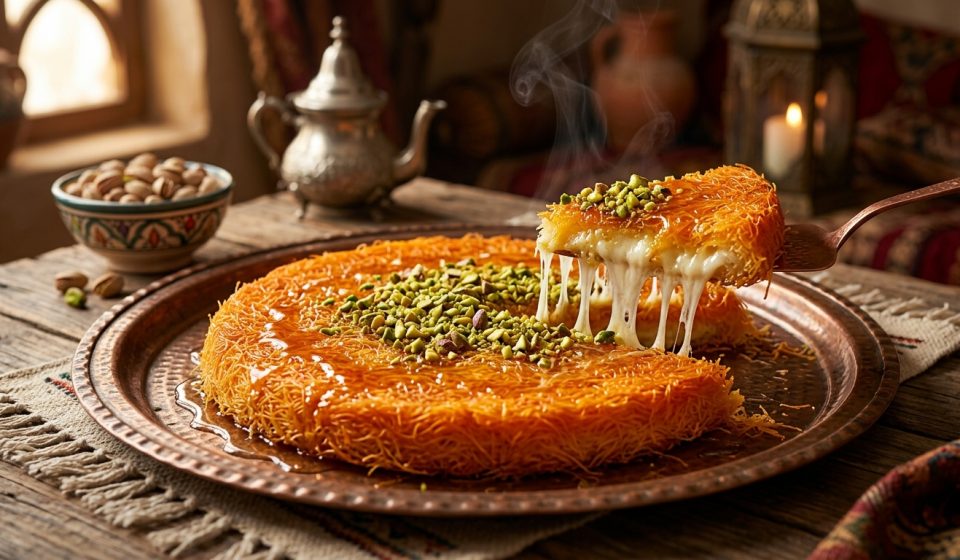
Yes, hardly any sweet pattern from the Middle East is so appealing to eating aficionados as Kunafa (some spell Knafeh or Kanafeh). A well-composed tableau of knotted, golden-red, crackly strands of spun dough encasing a heart of hot cheese (or cream) embedded in rosewater-soaked sugar syrup. So how do we become acquainted with this classic dessert?
Hence, why not take a journey into time and witness how the lovely Kunafa was born.
Kunafa History: From Royal Arab Cuisine to a Global Dessert
Food historians disagree on the specific origin of Kunafa. Historians find references to it mainly in the medieval Arab world, where royal chefs developed it as a delicacy.
The more familiar legends associate its invention with 10th-century Damascus, Syria. Ancient legends narrated that doctors presented Kunafa to Mu’awiya I, founder of the Umayyad Caliphate, as a cure for his insatiable hungriness between fasts of Ramadan. What sets it apart too is the prominence of the famous account locating the Fatimid Caliphate in Egypt. Where royal chefs prepared shredded pastries to celebrate Ramadan nights.
Though the most ancient forms of Kunafa were likely nothing more than casual honey-strewn rolled crepes. Arabic literature related to kunafah can even be translated as thin roll of honey. This concepts have been evolved over the centuries and build into a through-layered dessert, we know it now.
Kunafa Nabulsiyya: How Nablus Became Famous for Cheese Kunafa
It then traveled through the Levantine landscape and eventually settled in its Mecca: Nablus Palestine. Local patissiers replaced the traditional stuffing with Nabulsi cheese (white, mild stretchy sheep or goat milk cheese).
This innovation created Kunafa Nabulsiyya, which features a vibrant orange crust and a rich cheesy pull. Nablus got so much sought-after with its recipe that it has a place in Guinness World Records for producing the largest Kunafa ever made.
Regional Kunafa Variations Across the Middle East

Otoman Imparatorlugu’nun iç kısımlarındaki fethi yürüyüşüne paralel olarak geliştirilen bir tatlıdır. Now, its regional aspects prove the versatility of the dessert like:
Levantine (Palestine, Jordan Lebanon Syria): Thin semolina F(Na’ama) or cut-up kataifi dough (Khisna), filled with stretchy cheese or clotted cream.
Turkey (Künefe)*: Prepared in small copper pans, filled inside with shredded dough (also known as kadayıf). Hatay cheese and crushed pistachios on top.
In Egypt as a-seasonal (often with common daughter out on qashta or during the winter months, custard and not even cheese)
Frequently Asked Questions (FAQ)
What do bakers use to make Kunafa?
Vegetarians and nonvegetarians alike adore this dessert, made from noodle-thin threads (the basis of the Middle Eastern classic kataifi or shredded pastry) or semolina dough stuffed with a sweetish gooey cheese (Nabulsi or Akkawi) baked gold-brown and drenched in an arabic sweet syrup The locals call attar.
Is Kunafa eaten hot or cold?
Kunafa is easier when served warm right out of the oven. The warmth melts the inner cheese, creating a great contrast with its crunchy topping.
THE DESSERT Mix the most classically Middle Eastern sweet with one, small grading change.
Bakers make traditional Middle Eastern baklava by layering flaky sheets of filo pastry with chopped nuts, while they soak kanafeh in syrup and use a shredded dough base. If-1 In case you didn’t know – Kunafa is thin noodle strips or semolina pastry primarily based stuffed with cheese, cream fillers.



Comments are closed.
[…] someone who’s been to a Turkish patisserie, you’ll have undoubtedly noticed Revani. A syrup-soaked glistening golden cake covered in […]