







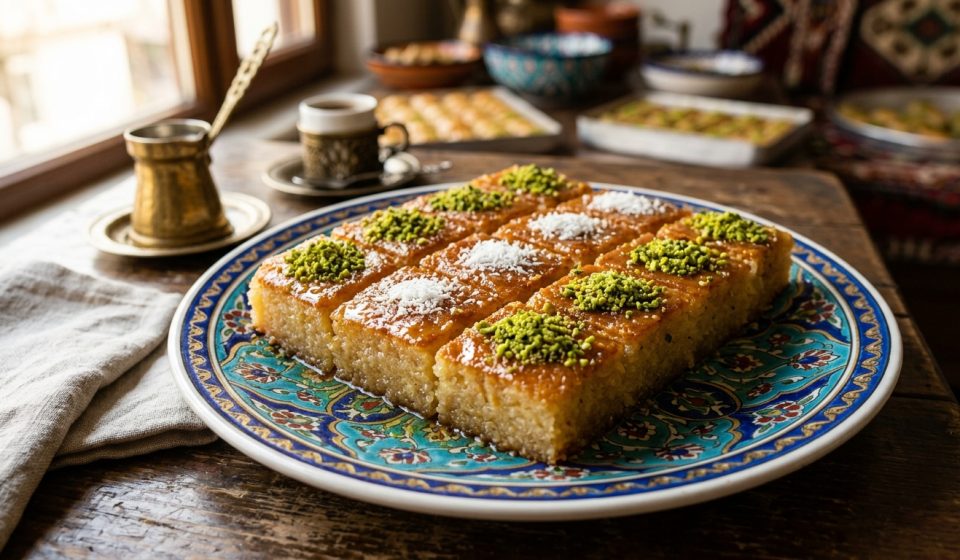

Turkish Revani: A Sweet Story from Ottoman Palaces to Tables
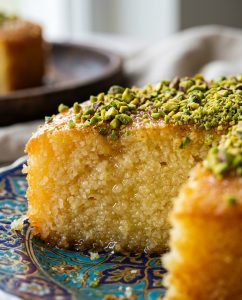
As someone who’s been to a Turkish patisserie, you’ll have undoubtedly noticed Revani. A syrup-soaked glistening golden cake covered in finely chopped pistachios or shredded coconut. Soaked in a sweet syrup, Revani is not only one of the desserts. But truly edible history bridging east and west old times empires. Today Mediterrena culture all through soft, sponge well textured cake.
Turkish Revani is a syrup-soaked semolina cake traditionally made with semolina, eggs, flour, sugar, and citrus-flavored syrup. It is commonly served chilled or at room temperature and garnished with pistachios or coconut.
Turkish Revani History: From the Ottoman Empire to Today

Revani History: The preparation of the dessert has its roots back into the 17th century, at the height of Empire Ottoman. According to the most common stories, imperial palace chefs invented this semolina cake to honour Sultan Murad IV’s conquest of the city of Revan (today Yerevan) in 1635. Royal pastries chefs prepared a festive dessert worthy of such glory-worthy occasion. Which is why they honored Revani for the conquered city.
A renowned idea connects the delicacy to Revani, a 16th-century Ottoman poet who made romantic poetry about the luxuries of eating great dinners. However, whichever story you believe, all of them end with one conclusion: royal chefs crafted this creation for celebration.
What Makes Turkish Revani Different from Other Syrup-Soaked Desserts?
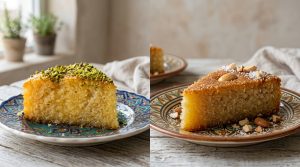
While chefs build much of Middle Eastern and East Mediterranean dessert-making with graceful layers of phyllo (synonymous with Baklava), it uses a sandy base of semolina flour (irmik).
Coarse Semolina Base: You need a coarse ground semolina base to show somebody and ability to soak up so much sugar syrup without falling apart.
The Zesty Syrup: A glaze of hot, citrus-peeling simple syrup (sherbet) dumpled over freshly baked & cooled cake to saturate the chunks in a taste of heaven.
This caused the dessert to have regional differences due to its expansion of the Ottoman Empire. Across Greece, Albania and the Levant (Basbousa or Namoura) you get regional quirks – additions common to those regions such as orange blossom water, yogurt or mastika.
Frequently Asked Questions (FAQ)
So, looking for similarities and differences, even between Revani vs Basbousa?
While bakers make both as dense semolina cakes soaked in syrup. History traces their origins back to the Ottoman Empire, though bakers differentiate their textures and ingredients.
Revani is usually traditional with eggs and flour to obtain a high, fluffy cake-like crumb making it lighter. While Middle Eastern Basbousa (sometimes) tends to be eggless denser and moistened by tahini.
Why Semolina for Revani and not common flour?
The grainy, pillowy texture of Revani is due to semolina. It absorbs the syrup without losing its shape, so doesn’t make your cake soggy.
Is Revani served hot or cold?
Ideally, people eat this dessert at room temperature or cold. When you allow the cake to rest after it absorbs that warm syrup, the semolina base absorbs and holds all the flavor throughout.
Is Revani prepared beforehand?
Yes! Honestly, it is even better on day two when the semolina has had all night to soak up that heavenly zest-y citrus syrup.


Comments are closed.
[…] you have ever visited Turkey or investigated Turkish cuisine, then surely, you are already clued in that food is not just something yummy as it can be an […]