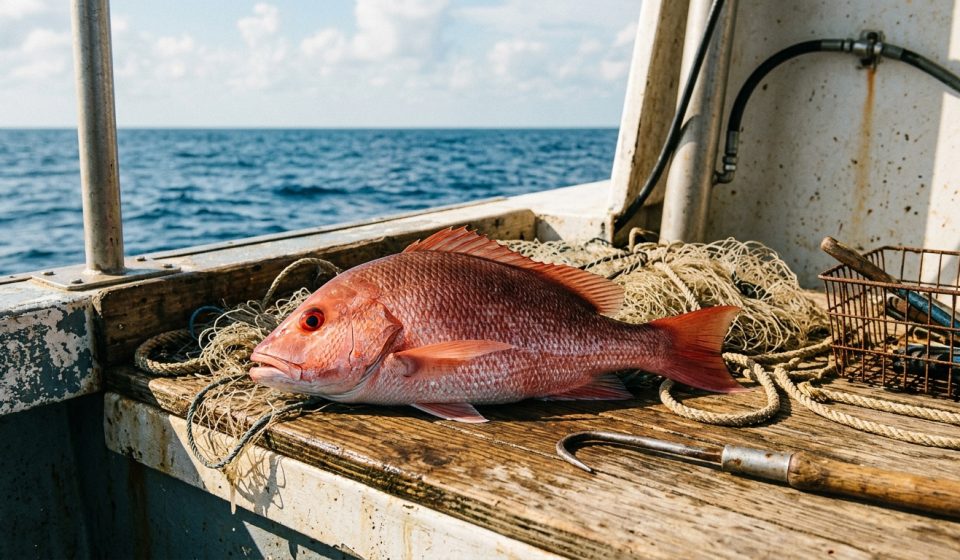

Northern Red Snapper: A Famous Fish of the Gulf of Mexico
Red Snapper (Lutjanus campechanus) is probably the second best-liked of all the premier fish in Atlantic Ocean and Gulf of Mexico fisheries. In addition to its firm texture and subtly nuanced buttery flavor. It has a long history as hand line harvested by Indigenous peoples, creation of commercial fishing in sophisticated fisheries and ongoing conservation controversies.
Early Roots: The Rise of the 19th-Century Fishery
Commercial red snapper fishery began in the 1840s, off Pensacola, Florida, using wooden sailing vessels called smacks with small compartments to store these fish alive salt water. Commercial fishing for them didn’t begin until the mid-1800’s.
It was during this period that the field saw advances such as rail transport and ice houses, which revolutionized things. It could now be shipped fresh from fisherman to restaurants across the Eastern Seaboard and the Midwest. Basically anywhere on the east side of Mississippi. People came to know Pensacola as the “Red Snapper Capital of the World,” launching a golden age along the Gulf Coast.
The near collapse and post-war expansion
World War II saw dramatic changes in input technology the fishery. Heavy diesel engines, fiberglass hulls, radar, and electric reels helped fleets progress farther from shore into deeper waters. Meanwhile, charter and recreational fishing were on the rise across the Gulf states around that same time.
But the unregulated fishing pressure has not been without its toll.
By-catch Issue: Rapidly expanding shrimp trawl operations caught a skyrocketing number of juvenile red snapper accidentally.
Decrease in Numbers: Unchecked over fishing had reduced the Gulf of Mexico’s breeding stock to only 2–3% of its historical levels by 1990.
1840’s: Localized Fishery (Pensacola)
1900’s: Fleet Expansion (Gulf & Mexico)
1950’s-1980’s: Industrial Boom & Unrestricted Capture
1990’s: Population Collapse (~2%-3% Fisheries)
Present Day: Federal Quota & Stock Recovery
Conservation Efforts and Modern Management

Federal agencies instituted strict conservation programs in acknowledgement of the crisis. This includes the limiting of the capture of juvenile snapper by introducing BRDs — By-catch Reduction Devices — to shrimp trawls. The rules included stricter catch limits, and limits on how long the season could run and what minimum sizes fish had to be to able to keep in both the commercial and recreational sectors.
Today, due to smart conservation measures, they are tremendously plentiful. Authorities continue to strictly control the seasons to protect the species from over fishing. But experts often cite the fishery as one of the great wildlife conservation success stories.
Frequently Asked Questions (FAQ)
What makes Red Snapper so appealing to people?
Red snapper has low-fat white meat along with semi-firm flesh and mild sweet flavor and is termed as a delicacy. It can be grilled, baked and pan-seared.
Where are Red Snapper indigenous to?
Snapper thrives throughout the Atlantic Ocean from Massachusetts to South America, with the highest concentrations living in the Gulf of Mexico.
Is Red Snapper still overfished?
Once overfished, Red Snapper has seen a stunning recovery after decades of strict quotas and gear regulations. The dynamics of population viability is something you have to watch because fishery managers can issue regulations over the long run.
How do I know if this is truly red snapper?
But actual red snapper is bright-red on skin, dark-red eyes and white flaky flesh. Alternative approaches: Purchase from reputable fishmongers or look for labels confirming harvest in the Gulf; as deception is a potential.