
Japanese Green Tea, From History and Culture to Evolution
Japanese green tea is not just a revitalizing beverage but one of the ancient traditions of mindfulness-based health and social ceremonial in a way. Currently Sencha and Matcha are the well-known varieties which common people consume as super food in a regular form. But the history of Japanese green tea is a colorful tapestry, spun by Buddhist monks, samurai warriors and creative masters.
Origins: The Medicinal Beginnings of the Heian Era.
The History of Japanese Green Tea traced to the Heian Period (794–1185). Buddhism came to Japan through visiting Buddhist monks, such as Saicho and Eichu, who traveled to Tang Dynasty China and learned about tea (caitai in Chinese) and returned with plant seeds.
In 815, the monk Eichu prepared fresh tea for Emperor Saga. Considered to have remarkable healing effects, the emperor ordered tea cultivation throughout western Japan.
At the time, only royal courts and high-ranking clergy consumed tea in a few select palaces. They treated it as an herbal medicine to boost health and used it outside temples to sharpen mental focus.
The Practice of Matcha Part 1: Zen Buddhism
But it wasn’t until 1191 that the game-changing moment occurred: Rinzai Zen Buddhist monk Eisai returned from China with fresh tea seeds and a method of preparing powdered tea, the ancestor of contemporary Matcha.
Eisai publishes Kissa Yojoki (How to Stay Healthy by Drinking Tea) championing green tea as the answer for good health, function and concentration. Zen monks used powdered tea to be awake for countless hours of meditation.
9th C Monks Bring Tea Seeds from China in 1191. Eisai Brings Powdered Tea 1642 Wabi-cha / Tea Ceremony Perfected in 16th C 1738.
During the 16th century tea master Sen, no Rikyu elevated the drinking of tea into an art form (Chanoyu or Wabi-cha). Focusing on simple, natural beauty and spiritual harmony (this became popular within the Samurai class who would practice tea ceremonies to clear their mind before battle).
The Edo Period: Sencha Allows Tea to Be a Spectator Sport
Green tea was a luxury for centuries — only in the hands of monks and nobility. That started to change during the Edo Period (1603–1867).
1738: The First Sencha — Artist and so-he Nagatani, developed the steaming and rolling process for loose-leaf Sencha. That ensured twiddly bright green and fresh vegetable flavor without the need for stone-grinding.
1835 (Invention of Gyokuro): Cultivators learned how to grow tea plants in the shade, achieving a special type of ultra high-grade green tea rich in umami complexity called Gyokuro.
Advancements in processing of tea caused green tea to transition from a mud-hole ceremonial performance by the elite, into an everyday treat for the masses.
Japanese Green Tea Today
Today we use mechanized steaming and drying for processing, but the principle is the same. Japan stands out from other green tea origins because Japanese producers steam their green tea leaves—rather than pan-frying them like most others—to preserve their bright colors, potency-enhancing antioxidants, and natural sweetness.
Frequently Asked Questions (FAQ)
Sencha VS Matcha (Short version)
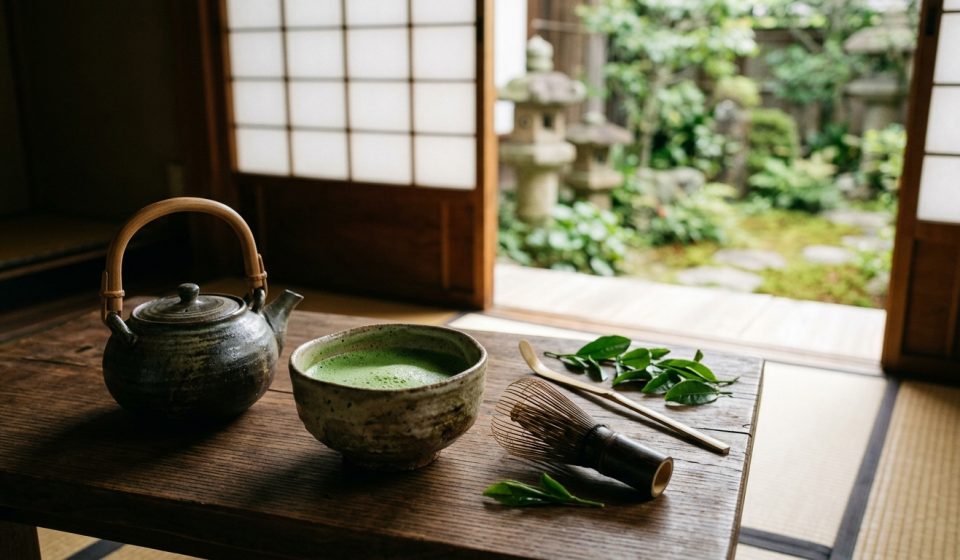
Matcha is powdered shade-grown tea leaves whisked in water immediately after grinding. Sencha, made from whole sun-grown green tea leaf buds struck at temperatures just over boiling and strained before drinking.
Let us look at why Japanese green tea is steamed (not pan-fired).
Japanese leaves are steamed immediately after picking to avoid oxidation. It maintains their bright green color, herbaceous taste and higher levels of L-theanine and antioxidants compared to pan-fired teas.
Q: Who discovered green tea in Japan?
Buddhist monks traveling from China. Most notably Saicho, Eichu, and later Eisai—introduced green tea seeds and accouterments to Japan between the 9th and 12th centuries. Eisai, in particular, shaped much of today’s Japanese green tea cultivation