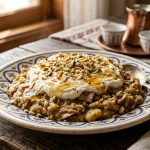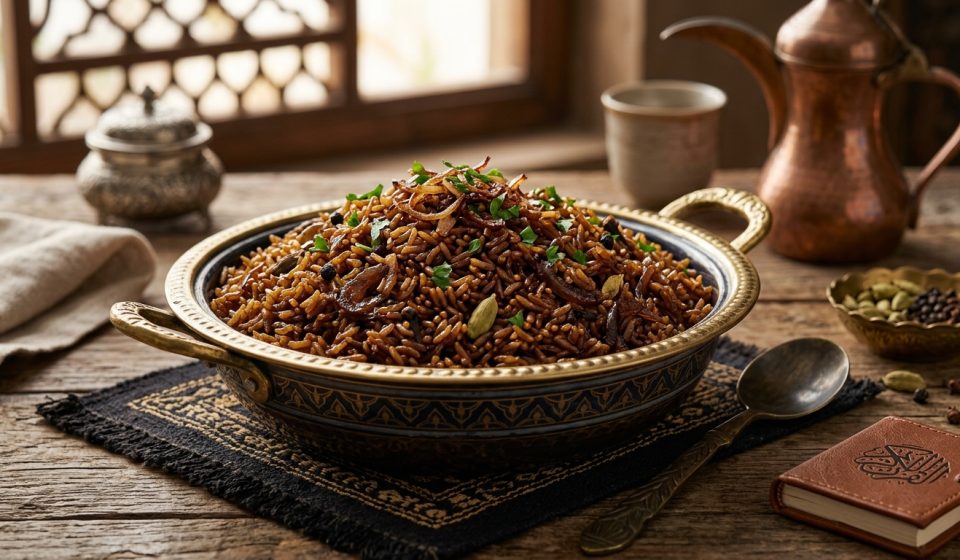

Mahmous: The Dark Rice of Eastern Arabia
Few dishes in Saudi Arabian cuisine match such a cosmopolitan character. People can control few rich rice dishes that anchor themselves so deeply in history and cultural identity as authentic Saudi Mahmous (محموص). On the other hand, food lovers prize Mahmous for its almost sensual, dark chocolate-brown silkiness and caramelized taste. Which originates exclusively from the Eastern Province—home to the historic coastal oases of Qatif and Al-Ahsa
What is Mahmous? Exploring Eastern Arabia’s Dark Rice
The Cuisine tells a story of transformation. Unlike constant favorites like tangy golden Kabsa or aromatic Mandi, it relies on cooks achieving extreme caramelization without burning the onions. Taking a lightly fried enormous volume of sliced onion to the deep mahogany color given signature via only specialty. It is a sponge for every drop of flavor when creating rice, and while using it. After that add in scented spices such as Loomi (dried lime), cardamom, cinnamon, black pepper.
The name Mahmous derives from a Semitic root meaning “roasted” or “parched,” which describes the intense roasting process cooks use on the onions before adding the rice.
The Historical significance & Historical of Saudi Mahmous in Eastern Arabia
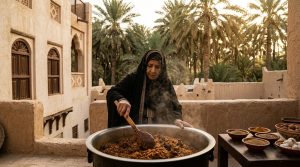
Mahmous history is a cross-section of the socio-cultural kernel of eastern Saudi Arabia:
Historically, local communities served the dish at the heart of their communal feasts, rituals, and prayers, turning the dish into a powerful symbol of community solidarity. The massive Qudoor are ready to feed whole neighborhoods and be the essence of hospitality, heritage and sphere.
The ingenuity of Oasis life: In the parched oases of Qatif and Al-Ahsa raw cooks perfected ways to intensify penetrative complex flavours using commonplace elements (rice, onion, ghee and dry spices).
Coastal Influences: Lying along the Arabian Gulf, trade routes brought rich spices to regions like Al Khobar. While cooks do make vegetarian options, locals usually top original Mahmous with delicious Gulf fish, fresh shrimp, or tender, juicy lamb.
Still today often enjoyed as a warm bowlful of comfort food traces its lineage back to Arabian Peninsula home cooking passed down through the generations.
Frequently Asked Questions (FAQ)
What gives Mahmous its dark unique color?
Those distinctive dark brown tones primarily come from slowly sautéing the onions until they are well caramelized. Authentic recipes never use dark soy sauce or food colouring.
Is Mahmous spicy or bitter?
Authentic cuisine, however dark, should not taste burnt or bitter. By controlling the temperature, the naturally occurring sugars in your onions caramelize away into sweet and savory deliciousness with every mouthful smothered by a warm blanket of smoky-spiced comfort.
Where did Mahmous originate?
Mahmous From the Eastern Province of Saudi Arabia (Qatif & Al-Ahsa) enjoyed in Surrounding Gulf Countries like Bahrain.
What are Kabsa’s differences compared to Mahmous?
Kabsa uses tomatoes, red/yellow spice and only-slightly-caramelized onion to create a bright yellow-orange dish. Mahmous leans on dark with long-browned caramelized onions that makes the dish darker in hue and smoky-sweet.